mom of all trades

mom of all trades

Listed among the best Indian blogs by mommies

Wednesday, July 10, 2013

Archeology for Dummies


 This summer  while on a visit to his grandmother’s place, Nachikaet decided that it was time that he had a new ‘passion’ in life. After deciding against breeding gold fishes (too labor intensive) and cooking ‘gourmet meals’ (being banished from the kitchen by my mother’s cook), he decided to take up archeology. He had his ‘eureka’ moment during one of the countless reruns of the Movie, ‘The Mummy’, to which sadly, we are often  subjected to by my husband, whose love for blood, gore and action sometimes surpasses his love for his family.

 Well, Nachikaet decided to unearth the ‘treasures’ that may be hidden in my mother’s backyard. Since any archeologist worth his salt or in this case mud, must have tools for his trade, Nachikaet started to collect the necessary equipment for his ‘dig’. After an hour of scavenger hunt he pronounced himself fit to dig. The ‘tools’ were a spade and a shovel ‘borrowed’ from his cousin’s beach set, a brand new bucket taken from his grandmother’s bath room, also ‘borrowed’; and a person who would actually dig.

Lesson 1: An archeologist only supervises; (well the title does mention its for dummies)
The assistant was my father, the only ‘tool’ which came along willingly.
After spending an entire evening supervising and actually digging; (his assistant proved to be physically unfit for the task and was sent back unceremoniously after being subjected to a lecture on eating well)
Nachikaet decided that whoever occupied his grandmother’s backyard in the ‘early ages’ were decidedly boring. So instead of digging ,he decided to bury something instead. At least the generations after him will not find him boring.

Lesson 2: If an archeologist can dig, he can bury as well.

  The next one hour was spent  in collecting bits of things, which would give future archeologists’ a glimpse into the life of  the ‘not so early man’.  So a bottle was procured; ‘borrowed’ from the above mentioned cook’s larder when he was not looking, and its contents (his treasured home made sambar powder*) was thrown out.  He then filled it with a little note describing himself and his life, a few old toys and other sundry house hold essentials that we ‘not so early men’ use.  Once it was safely buried, began the discussion of the possible future people who would ‘discover’ it and marvel at the life of ‘early Nachkaet’. His latest brainwave is to “bury his ancient parents” next to the previous bottle next time he visits his grandmother.
 
Well at this point, I am hoping he  was referring to a photograph of his 'ancient parents'


Lesson 3: I need to give him a good photograph of myself, before I become even more ‘ancient’
 
*Sambar powder: Sambar is a vegetable stew or chowder based on a broth made with tamarind and pigeon peas and is very popular in the cooking of southern regions of India, especially in Tamil Nadu, Kerala, Karnataka and Andhra Pradesh. Each state in South India prepares it with a typical variation, adapted to its taste and environment.
Source:       http://en.wikipedia.org/wiki/Sambar_(dish)
 Sambar powder is a dry spice mix used to prepare sambar.

Thursday, July 4, 2013

Return of the Reusable Diaper: Disposables vs. Fabric


Today we have a guest post from the lovely team at Surf excel. One of their core values is to unleash human potential. They believe in  encouraging parents to share experiences and exchange information on public platforms. Today they speak about a very relevant issue faced by mothers every where, the timeless battle between disposable and fabric diapers for kids.


Return of the Reusable Diaper: Disposables vs. Fabric

‘Reusable diapers? What a horrible idea!’ Or at least that’s the line that’s being sold to us by companies like Huggies, Pampers, Dri Fit, Snuggy Dry, and the like. But do your research and you’ll find there’s more than meets the eye in the disposables vs. cloth debate. Weighing up the pros and cons is a complex matter for any busy mom, who will have lots of questions – will disposables make my baby sweat? Don’t cloth diapers leak? Are disposable or cloth diapers cheaper? Here we’ve taken some time to summarize the facts so you can make an informed decision.

How will they affect my baby’s skin?

In India, one of our main concerns when choosing the right diaper for our babies is the climate. We worry that our babies will sweat too much, will be in contact with irritants, and will end up with diaper rash. Since delicate skin should never be in prolonged contact with water (a strong argument for leaving our babies diaper-less), the choice of diaper will directly impact the frequency at which we must change our babies and the number of diapers we will need to have available – and therefore the cost.

Disposables are considerably better than they used to be in terms of breathability, and are often designed to draw large amounts of moisture away from a baby’s skin. They can, however, be full of chemicals as a result – ‘green’, chemical-free disposables are unfortunately harder to come by, and are less absorbent and more expensive.

In India, the cloth diapers that we’ve traditionally used (langots) have a dreadful reputation for low-absorbency. And for a long time, the newer, adaptable fabric diaper systems were either difficult to buy here or incredibly expensive. These days, there are a large number of affordable cloth options available in India that are designed to be absorbent – with or without inserts ­– and cater to even the most sensitive of skin. With fabric diapers, though, it’s also important to think about your choice of washing detergent in order to limit potential sources of irritation.

How convenient are cloth or disposable diapers?

Disposables are widely available, leaking is rarely an issue, and when one’s dirty, you just throw it away and grab another. When it comes to potty-training though, critics say disposables can actually prolong the process, as toddlers are so used to feeling dry they are less likely to be in tune with their body’s signs that they need to go to the toilet.

As for fabric diapers – well, potty training may well be easier to deal with, but when you’re out and about you’ll still have to find a way to discretely collect used diapers to take home later. You’ll also need to find space in your bathroom for soaking buckets, and a way to deal with the never-ending pile of washing. If you choose fabric diapers, you’ll definitely need to be organized.

How do I weigh up the monetary cost?

The average child has their diaper changed 6000 times until they are potty-trained. With disposables, you’ll purchase approximately this many individual diapers. The cost will be spread fairly consistently over the first two years of life (maybe longer) and will vary according to brand. In general, cheap disposable diapers tend to be less absorbent (so you use more), and ‘greener’ diapers are more expensive.

The cost of the initial purchase of fabric diapers (approx 15-20) depends on the system you choose, and whether you plan on using inserts. With langots the initial cost can be very low, but adding inserts to make them more absorbent will mean a weekly outlay too. More modern, efficient fabric diaper systems, like the BumGenius brand, have a higher initial cost that might not be attractive for lower income families, and inserts will take away from the weekly budget too. It’s also important not to forget the cost of washing in your calculations: increased water, electricity and detergent bills. And unless you are in a situation where you can outsource your washing or line-dry the diapers ­at home ­– even in monsoon weather – you’re going to need a buy a tumble dryer and soaking buckets at the very least. On the upside, diaper systems can be purchased second-hand, and used for multiple children too.

Which is better for the environment?

On the face of it, this should be an easy question, but there are a surprisingly large number of non-environmentally friendly factors on both sides. Disposable diapers are generally made from nonrenewable resources, represent an enormous amount of landfill waste globally – something like 27 million tons per year in the US, for example – and they can take hundreds of years to breakdown. But in a country like India, where water and energy is something we should be aiming to conserve, fabric diapers also come at a price. They are at their most environmentally friendly when these conditions are met: they are bought second-hand; washed in large loads in energy-efficient machines, with detergent that is gentle to the environment; line-dried; and used for more than one child.


Tuesday, June 11, 2013

Keep Kids Healthy and Happy During Traveling

Today we have a guest post by Kendra Thornton, who was a Director of communications at Orbits, before she was promoted to the post of 'full time mommy' to three beautiful kids. She has travelled to over 28 countries on 6 continents and has been quoted in the news about seasonal travels trends and destination all over the united states.  Today she gives us a few useful pointers on how to keep kids healthy and happy during travelling.


Keep Kids Healthy and Happy During Traveling

The point of going on a vacation is to have a care-free and fun time, but this doesn’t mean that you can’t plan ahead where it is appropriate. When traveling with your children, you want to make sure that they are safe and happy, and there are many things that you can do to make this a reality on your trip.  

1. Beware of the Airplane Bathroom
According to Dr. Charles Gerba, you won’t find another environment that has more germs than the lavatory in an airplane. As if this isn’t bad enough, the environmental microbiologist stated that he hasn’t tested an airplane bathroom that didn’t have traces of E. coli. It’s not always going to be possible for you to thoroughly wash your hands with hot water and soap, so make sure to travel with a sanitizer that has an alcohol base.

2. Avoid Traveling with Tired Children
If your children are on a nap schedule, a good plan is to book your flight or plan your car trip for a time when they will be awake and alert. Airplanes are notorious for cranky and tired children who can’t settle down during the flight, but this doesn’t have to happen to you. If your kids are well-rested, they will enjoy the flight much better (especially if you are changing time zones) since they will be more alert and not as restless and groggy.

3. Travels with Snacks
Sometimes, traveling can be highly inconvenient because you aren’t always near a place where you can pick up a snack. Avoid this unpleasant reality by packing travel-friendly foods before you leave. The ones that work the best are pretzels or a trail mix that you can create yourself that contains peanuts, raisins and dried bananas and coconut flakes.

4. Don’t Forget to Take Time for Yourself
Of course, someone will need to be with the kids at all times, but you and your husband will need time for yourselves on this trip as well as time spent together. One way to arrange this is for you and your husband to take turns taking care of the kids while you each take part in activities that you enjoy. However, make sure that you can spend some time alone by hiring a babysitter or sharing a bottle of wine after the kids have gone to bed.

5. Eat a Healthy Breakfast
Theme parks aren’t known for having the healthiest food choices. In order to ensure that your kids have at least one good meal for the day, plan to have a very healthy breakfast before you descend upon the theme park of your choice. I like using Gogobot to find out personal reviews from other family travelers; I found a great Orlando hotel with a free kids continental breakfast!

Remember that you are going to want to have fun on vacation without having to stick too closely to a schedule, but planning a few things ahead can decrease the chances that you or anyone in your family will get sick. Then, you can thoroughly enjoy your trip.  


Kendra can be reached at  kendrathornton3@gmail.com
 

Sunday, April 21, 2013

Summer sojourn


Summer afternoon... the two most beautiful words in the English language.
 -Henry James

Nachikaet is well and truly “into his summer holidays” and is making the most out of his available ‘resources’ in terms of

Finances   -being fully loaded after an extremely rewarding vishu kainettam* spree and buying well, more Ben 10 aliens (sigh I have given up on that one)

 Manpower- getting his grandparents, aunt and uncle to do their bits to make his life comfortable.

 Free time- getting the above mentioned manpower to threaten, cajole or bribe his mother to let him watch TV/play videogames.

Intangible resources- Using his good will, (the length his stake holders are willing to go for him) and his brand power (his adoring little brother and grandparents for whom he is the chief super hero in residence)

With the expertise of a corporate honcho, he can be found holding power snacking sessions( power lunches are passé) with the other stake holders (his brother and grand father) on how to configure their resources to over come challenging environments ( his parents)

What strikes me most is his almost obsessive desire to make the most out of each day. To savor each moment and enjoy it, like there is no tomorrow.  To have no no particular agenda for the day other than to live, laugh and be happy.

So I plan to do my bit too this summer because as Robert Brault said,  in the happiest of our childhood memories, our parents were happy too


* Vishu Kaineettam, the gifting of money to children by the elder members of family on the occasion of Vishu, the harvest festival of Kerala. (source: www.indiavideo.org/vishu/vishukkaineettam)


. 


Thursday, February 21, 2013

Entrepreneurial endeavours: the inside story of how a business magnate was born


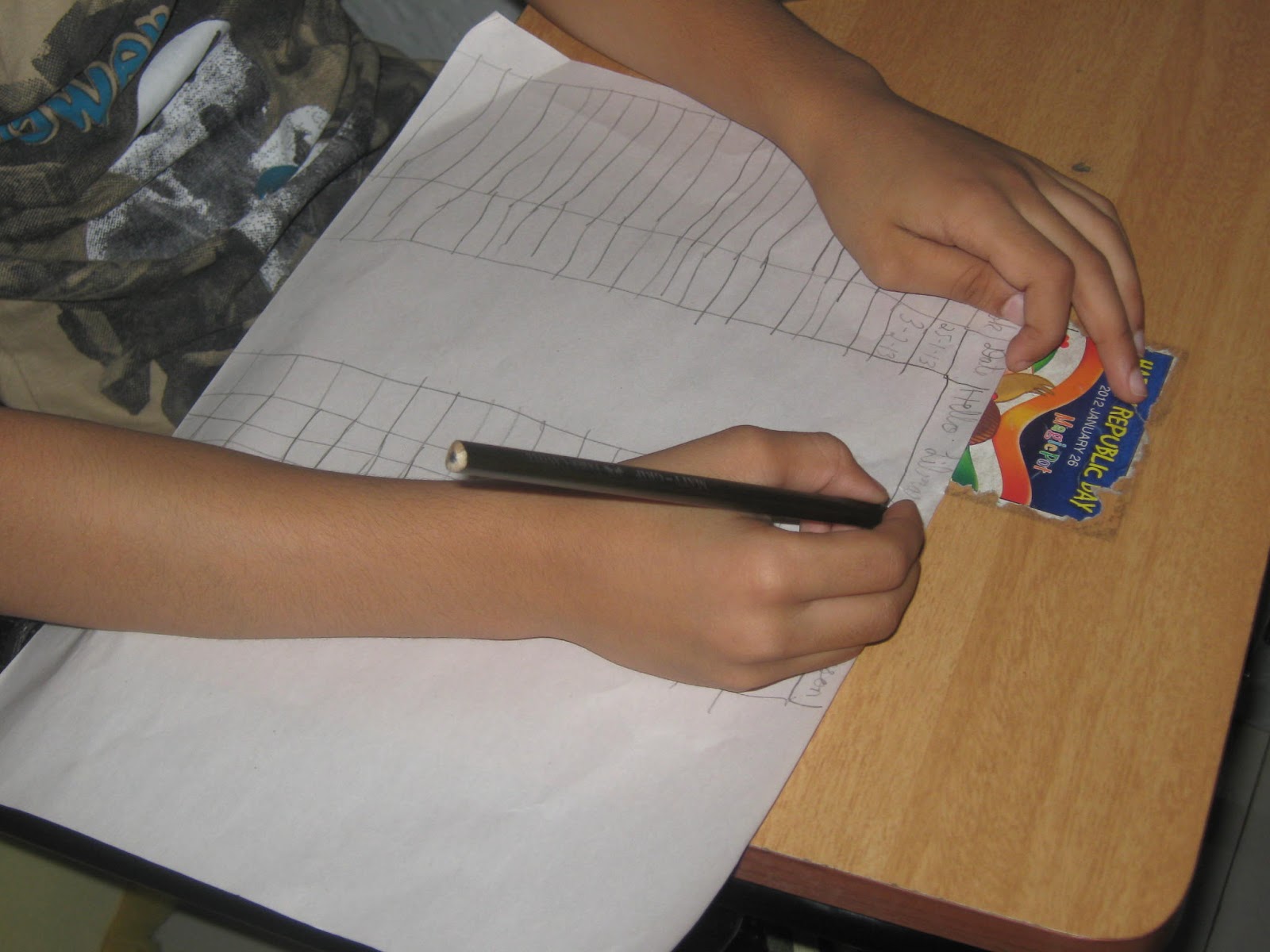
Last week Nachikaet started his first entreprenuerial venture. After finding out that he was the only 'incomeless' person in the house, (he took a few hours to digest the information that his mother actually gets paid to write the weird stuff that she writes) he decided to assess his financial condition. After a few hours of reviewing his options and contemplating everything from walking the neighbor’s dog to breeding fishes, he decided that in order to have a "steady" source of income he would start his own business, become his own boss. That was how "Hello library" was born.

Using his ample collection of books as a “start up capital” Hello library was launched. It was inaugurated by well, Nachikaet himself. Then it was time for some aggressive marketing strategies. It sure was aggressive. Nachikaet coaxed and cajoled and threatened all of us including our live in help, who considers all of us “readers”, missing a piece or two in the upper storey. So as a result of his “effective” marketing strategies, Nachikaet gained three “life members” for his library. His dad, mom and the above mentioned hapless house help.

In order to ensure strict quality control, a register was made with all the details of the transactions.  The reading fee was set at Rs 5 per book. Transactions would be made strictly during business hours only. Every care was taken to ensure that the business hours would not clash with his TV time or play time. Special discounts were allowed for customers who would come during his study time.

After a couple of days, Nachikaet decided that we were not spending enough time reading, and issued a declaration that each of us will have to read a minimum of 4 books in a week. (He couldn’t stand it if his parents were not well read) The business soon began to flourish and the arrival of his grandparents was an added bonus. His grandparents were subjected to a lecture session on the perils of not reading books and last heard, his grandfather has enough Tinkle comics to last him the rest of his life and his grandmother still has nightmares about the countless aliens in the Ben 10 books she is forced to read.
And as for the little business tycoon in the making he has decided to ‘go public’ with his venture by inviting his neighborhood friends to join the library.
Here are some visuals

Hello Library timings


   An inside view
The first life member


Let the money flow
 

Thursday, January 31, 2013

Natural pregnancy: Connecting with nature


Today we have a guest post by Katie of 'Moore from Katie' She is an active blogger and dicusses the topics of motherhood, children,fitness, health and all other things 'mommy'. She enjoys writing,blogging and meeting new people. You can contact her via her blog Moore from Katie or her twitter id @moorekm26.

Katie speaks about a very relavant topic-  How to go through your pregnancy as naturally as possible.
Over to Katie


Natural Pregnancy: Connecting with Nature
 
I have always been an adventurous person, and as newlyweds my husband and I would take weekend trips to the country to hike and explore new state parks and attractions. I loved being outside, and I loved the together time it afforded us. Both of us had hectic work schedules, so this was something we could only do on weekends or holidays. I never ventured out by myself because I always figured I would be bored.

Once I was pregnant with my first child (and home from work on maternity leave), I truly was bored. I took an extended maternity leave so I could focus on having a healthy pregnancy and take time to enjoy carrying my child, but more than often I felt bored, restless, and lonely. I would sit and read pregnancy books, watch television, and wait for my husband to get home. Being pregnant and alone wasn’t what I thought it would be.

One day my husband suggested I go take a walk on one of our favorite trails at the state park while he was at work. At first I dismissed the idea because I thought it would make me further isolated, but I also wanted my baby to get some fresh air! I had been staying active by doing 
prenatal exercise video
routines, but they felt stuffy and strange.

Once I was on the trail, I felt a peace I hadn’t since I found out I was pregnant. I felt connected with nature, motherhood, and myself. I liked that everything was quiet, and I could hear the sounds of my walking and feel my baby kicking. For the first time, I enjoyed the fact that I was pregnant.

For expecting moms, I would recommend getting outside just once a week. You can use the time to think about how your pregnancy is going, the state of different relationships, what you think being a mom will really be like. There are many decisions that must be made as a new mom; what brand of diapers, deciding on 
cord blood banking
, when to return to work and so much more.   You can even talk directly to your baby – it wasn’t for me (I tried), but I know it’s helpful for a lot of people.

You don’t have to try anything out of the ordinary. A simple walk through a prairie or park will remind you why you wanted to bring a life into the world in the first place. It definitely was a much more uplifting way for me to stay healthy than watching videos in my living room.

Incorporating natural exercise into your life is also cost-effective. The gym memberships, products, and exercise kits are great for some people, but I moved more when I got out the door.
The Centers for Diseases control and Prevention
advise that low- to moderate-intensity exercise while pregnant is important for keeping your lungs and heart healthy, so it is important to find something you enjoy doing.

I’m glad I tried more naturalistic exercise during my pregnancy because it helped me prepare emotionally for motherhood, and it helped me enjoy my own company. I still try to go for walks alone, although now that my daughter is born, I’m normally pushing the stroller.

Sunday, January 13, 2013

To ride a rainbow- my entry for the get published contest.


        Story idea
 
      This is the story of Mira, whose life revolves around her obsession to be the ‘perfect wife’. Having lost her mother at a very young age, and being brought up by her disciplinarian father, Mira longs to feel loved and cherished. Her husband of 10 years, Venu, is a chartered accountant who lives in his own world of profits and losses. Does he love Mira? One can only safely come to the conclusion that if he does not love her, he doesn’t hate her either. For Venu, Mira is someone who is there to take care of the minor essentials of everyday living; so that he can continue to exist peacefully in his magical world of numbers . The fact that the couples are childless doesn’t help matters and they continue to live their separate lives under the same roof.
 
        She spends each day in a frenzy of activities to live up to her self constructed image of the ‘prefect wife’. This she hopes will make her worthy of being loved with desperation and frustration mounting and nobody to talk to; Mira begins to sink into a deep depression, which sways dangerously into suicidal tendencies. Then out of the blue, Venu and Mira are invited by a university friend whom they have not seen in 10 years, to spend a weekend at their house in Bangalore. Not able to refuse, the couple ends up taking that trip without the slightest clue that their lives would never be the same again. A series of events which takes place over the two days changes the equation between Mira and Vasu, some thing that 10 years of life together failed to do. Will Venu be able to love Mira the way she so desperately wants him to? Or does life have more surprises in store for her?
 
 
       What makes it real
 
       This story is about a woman who has spent most of her life waiting to be loved. This story has been inspired by the narrator's observations of real life people. It is about how the greatest of love stories can start with the simple act of loving oneself first. Love need not always be a fairy tale romance, it can be that little bit of magic within ourselves that makes us happy.
 
        Excerpt:
 
        Mira let out sigh. This was her favorite part of the day. With her husband at work, and the maid sent out for grocery shopping, she had the whole house to herself. She let herself into the kitchen. Every time she entered her kitchen, she felt a sense of pleasure. It was warm and comforting, designed like a farmhouse kitchen; no cold steel and metal kitchen for her. As if there wasn’t enough coldness in her life already she thought wryly, as she put the kettle on to make herself a big mug of cardamom tea. The olive green pods wrinkled and purged, waiting to be discarded, just like moth scented dreams from a faraway time.


      This is my entry for the HarperCollins-IndiBlogger Get Publishedcontest, which is being run with inputs from Yashodhara Lal and HarperCollinsIndia

       If you like this story idea, please like it at  http://www.indiblogger.in/getpublished/idea/440 by clicking on the red heart
         Each vote makes a difference.